
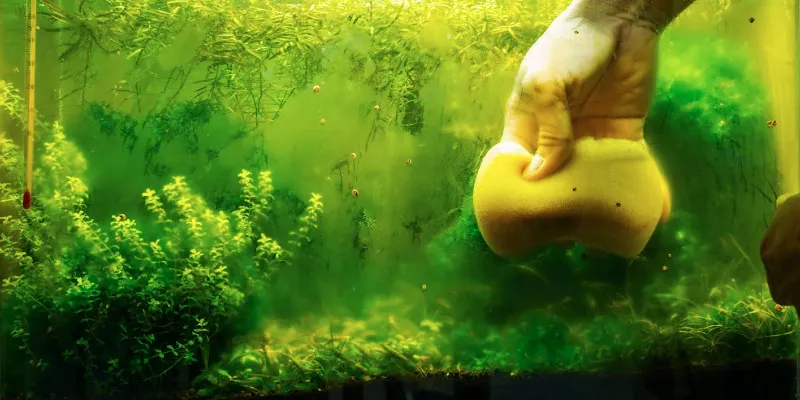
Akvaryumda yosun nasıl önlenir? Nasıl temizlenir?




Aquarium algae types
Some of the most common algae species in aquariums are as follows:
- Green spot algae: This type of algae, which is usually seen as small green dots on aquarium glasses, proliferates due to high phosphate levels and low carbon dioxide (CO2) levels.
- Hair algae: This is because it has thin and long filaments. gets the name. It often grows on plants and decorations and can take over the aquarium if left uncontrolled.
- Black beard algae: This type of algae consists of curly filaments that are black or dark blue-green in color. Poor water quality is one of the reasons for growth.
- Diatom (brown algae): It is usually seen in newly established aquariums. It occurs due to high silica levels and low light levels. Most of the time, it disappears on its own as the aquarium balances.
- Green water: It is not actually algae, but microscopic green algae that floats freely in the water. Excessive light and nutrient levels can cause this condition to occur.
- Blue-green algae: Technically it is not a type of algae or seaweed, but a type of cyanobacteria, and is often associated with poor water quality and high nutrient levels. It spreads in various parts of the aquarium and forms an oily, slippery layer.

- Adjust lighting: Algae multiply rapidly when exposed to strong light for long periods of time. Keep your aquarium light on for 8-10 hours a day and turn it off the rest of the time. It is important to keep the power and duration of light at the ideal level for your fish and plants.
- Feed the fish in a controlled manner: Do not overfeed the fish. Feed them as much as they can eat once or twice a day.
- Change the water regularly: Regular water changes help keep the nutrient levels in the water under control. Change about 20-25% of the aquarium water, usually once a week.
- Optimize filtration: A good filter prevents algae growth, keeping water quality high. Clean and maintain your filter regularly.
- Add plants: Live plants prevent algae from growing rapidly because they deplete the nutrients in the water. Therefore, the presence of healthy plants in the aquarium prevents algae formation.
- Algae-eating creatures: Some fish and shellfish species eat algae. For example, goldfish, otocinclus and some species of shrimp consume algae and control the growth of algae in the aquarium.
- Check CO2 levels: A balanced level of carbon dioxide in the aquarium promotes healthy growth of aquarium plants, which prevents algae formation.
- Keep an appropriate number of fish in the aquarium: An aquarium with an excessive number of fish creates fish waste and therefore nitrate and phosphate levels. may cause it to rise. This encourages algae growth.

How to clean the algae in the aquarium?
Although cleaning the algae in your aquarium can sometimes be really annoying, the following methods will help you. may be:
- Algae scrapers: Hard plastic or metal scrapers can remove algae without scratching the aquarium glass.
- Algae brush: You can use these brushes to clean moss, especially on rocks and decorations.
- Chemical cleaners: There are special chemicals used to control algae growth in the aquarium. These chemicals kill algae and stop growth on aquarium glass, decorations, and plants. However, you need to be careful when using such products. If you use it excessively, your aquarium animals and plants may be damaged.
- UV Sterilizers: It prevents the spread of algae by killing algae spores in the water. However, these devices are generally more expensive and are only used in large aquariums or in cases of serious algae problems.
- Physical cleaning:You can clean algae-grown decorations and plants by removing them and washing them with warm water. However, be careful not to damage it while doing this.
Remember, algae growth usually indicates that something is out of balance in an aquarium. Therefore, aside from cleaning the algae, it is important to determine the causes of algae formation and make the necessary arrangements.


Yorumlar (0)